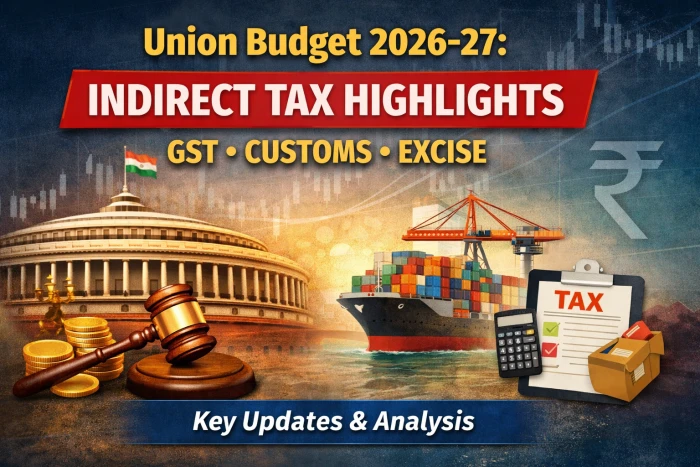
Union Budget 2026–27: Key Impacts on Indirect Taxes (GST, Customs & Excise)

Greater emphasis on technology‑driven compliance, analytics‑based scrutiny, and system‑generated notices.
Strengthening of data matching between GSTR‑1, GSTR‑3B, e‑Way Bill, and other databases to curb tax evasion.
Impact:
Genuine taxpayers benefit from faster processing.
Non‑compliance and mismatches may trigger automated notices.
Continued focus on restricting fraudulent ITC claims.
Enhanced checks on fake invoices and non‑existent suppliers.
Impact:
Businesses must ensure vendor compliance and regular reconciliation.
Proper documentation and periodic ITC reviews become essential.
Policy intent to reduce GST litigation through rationalisation of provisions and procedural clarity.
Encouragement of appeal disposal and faster recovery mechanisms.
Impact:
Pending disputes may see quicker resolution.
Professionals must guide clients carefully in reply drafting and appeal filing.
Reduction or restructuring of customs duty on raw materials and inputs used in domestic manufacturing.
Selective increase in duty on finished imported goods to promote local production.
Impact:
Lower input costs for manufacturers.
Stronger protection for Indian industries under Make in India.
Simplification in customs procedures for exporters.
Faster clearances through faceless and risk‑based assessment.
Impact:
Reduced transaction costs for exporters.
Improved global competitiveness of Indian goods.
Central Excise remains applicable mainly on petroleum products, tobacco, and a few notified items.
Budget 2026–27 focuses on revenue stability and discouraging harmful consumption.
Impact:
No major structural overhaul, but targeted duty adjustments may affect pricing.
Relevant mainly for specific industries and traders.
Strengthening of audit, inspection, and investigation powers under indirect tax laws.
Use of AI and data analytics for detecting tax leakage.
Impact:
Increased scrutiny for high‑risk taxpayers.
Importance of correct returns, reconciliations, and timely compliance.
Budget reinforces the importance of GST practical knowledge, return filing, ITC rules, and compliance management.
Strong career scope in GST audits, litigation support, and advisory services.
Shift from manual checks to system‑driven compliance.
Advisory role becomes more important than routine return filing.
The Union Budget 2026–27 signals a mature phase of indirect taxation in India, where the focus is not on increasing rates but on plugging leakages, simplifying procedures, and encouraging domestic manufacturing. For GST practitioners, accountants, and students, the message is clear: accuracy, compliance, and digital readiness are no longer optional—they are essential.
At Institute of Account & Taxation Training (IATT), we continuously update our courses to align with such budgetary changes, ensuring students and professionals stay ahead in the evolving tax landscape.
Stay connected with LearnWithIATT.com for the latest updates, practical GST learning, and budget‑based amendments explained in simple language.